

Unit 16 — The Continent of Africa
About this unit
This unit takes us to Africa — the second largest continent on Earth, the cradle of humanity, and home to a young, fast-growing population. You will watch a short video, look at a map of Africa, read about its geography, history, languages, wildlife and people, learn the key vocabulary, and answer reading comprehension questions in an interactive practice.
Watch — A Look at Africa
Watch this video carefully. You can replay it and turn on subtitles if it helps. After watching, the worksheet at the bottom of the page asks for your reflection.
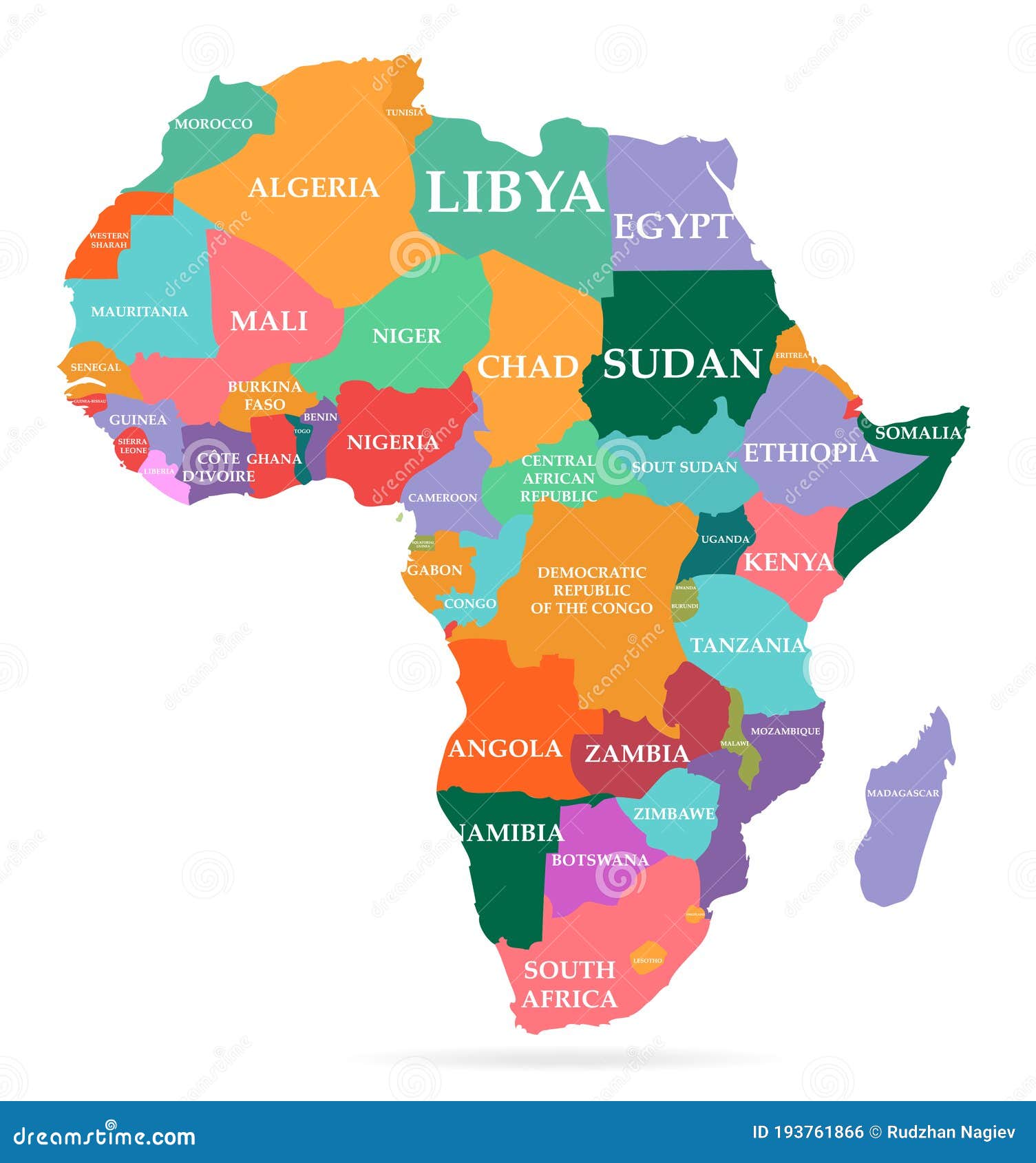
Map of Africa
Here is a map of Africa. Try to find the well-known countries — Egypt, Nigeria, Ethiopia, Kenya, South Africa — and the great Sahara Desert that fills most of the north.
Reading: Africa — The Cradle of Humanity
Africa is the second largest continent on Earth, after Asia. It covers about 20% of all the land on the planet and is home to about 1.4 billion people. Africa is also the youngest continent — most of its people are children, teenagers, or young adults.
Africa has 54 countries — more than any other continent. Some of the largest, by area, are Algeria, the Democratic Republic of the Congo, Sudan, Libya, and Chad. By population, the most populous countries are Nigeria, Ethiopia, Egypt, the DR Congo, and South Africa.
The geography of Africa is enormous and varied. In the north lies the Sahara Desert — the largest hot desert in the world, almost the size of the entire United States. The Nile, the longest river on Earth, flows through northeast Africa from south to north and ends in Egypt. In central Africa is the Congo Rainforest, the second largest rainforest in the world. The Great Rift Valley in eastern Africa is a huge crack in the Earth’s surface that holds many lakes, including Lake Victoria, the largest lake in Africa. Mount Kilimanjaro, in Tanzania, is the highest mountain on the continent. In the south are the wide, dry savannas where the most famous African animals live.
The climate of Africa is just as varied. The far north (Morocco, Tunisia) has a Mediterranean climate. The Sahara is one of the hottest and driest places on Earth. Around the equator the weather is hot and rainy, with thick rainforests. Farther south, savannas have hot summers and cooler winters with little rain. The far south (parts of South Africa) has a Mediterranean-like climate again.
Africa is sometimes called “the cradle of humanity” — that is, the birthplace of humanity. Scientists have found the oldest fossils of modern humans (and our ancestors) in East Africa, especially in Ethiopia, Kenya, and Tanzania. From there, humans slowly spread across the rest of the world.
The continent has an extremely long history. Long before Europe was famous, the civilization of Ancient Egypt was building pyramids on the Nile. Later, powerful African empires — the Mali Empire in West Africa (with its rich city of Timbuktu), the Songhai Empire, the kingdom of Great Zimbabwe, and the Ethiopian Empire — were centers of trade, learning, and art. Starting in the 1500s, however, millions of Africans were taken across the Atlantic in the terrible slave trade, and from the late 1800s most of Africa was colonized by European powers (France, the United Kingdom, Portugal, Belgium, Germany, Italy and others). Most African countries finally won their independence in the 1950s and 1960s. South Africa ended its system of racial separation, called apartheid, only in 1994 — when Nelson Mandela, after 27 years in prison, became its first democratically elected president.
Africans speak more than 1,500 languages. Arabic is spoken across much of north Africa. Swahili, born in East Africa, is now used as a common language between people from many different countries. Other major African languages include Hausa and Yoruba in West Africa, Amharic in Ethiopia, and Zulu in southern Africa. Because of colonization, French, English, and Portuguese are also widely spoken.
Africa is famous all over the world for its wildlife. The grasslands and national parks are home to lions, elephants, giraffes, zebras, hippos, rhinos, and many more. People come from all over the world for a safari — the Swahili word for “journey” — to see these animals in their natural environment. The “Big Five” — lion, leopard, elephant, rhinoceros, and buffalo — are the most famous animals to spot.
Today, Africa is one of the fastest-growing parts of the world. Mobile phones and the internet are spreading even where electricity is still new. African music (Afrobeats, hip-hop, jazz), African film, and African writers are reaching a global audience. The future of the planet is closely connected to the future of this huge, diverse, young continent.
Vocabulary
| Word | Meaning |
|---|---|
| continent | one of the seven very large areas of land on Earth |
| geography | the study of the lands, mountains, rivers and people of a place |
| desert | a place that gets very little precipitation; can be hot or cold |
| river | a long line of fresh water that flows from high land to the sea |
| rainforest | a thick forest in a warm, very rainy part of the world |
| lake | a large area of water surrounded by land |
| mountain | a very high piece of land (much higher than a hill) |
| savanna | a wide, hot area with grass and few trees, common in Africa |
| rift valley | a long, deep valley caused by movements in the Earth’s crust |
| climate | the usual weather of a place over many years |
| tropical | describing the warm, often rainy areas near the equator |
| cradle (of) | the place where something began (e.g. the cradle of humanity) |
| civilization | a developed society with cities, writing, and government |
| empire | a large territory ruled by one government, king or queen |
| trade | the buying and selling of goods, often between countries |
| slave trade | the historical buying and selling of people, especially Africans (1500s–1800s) |
| colonize | to take political control of a country and send settlers there |
| independence | freedom — when a country rules itself, not another country |
| apartheid | the past system in South Africa that legally separated people by race |
| capital | the main city of a country, usually where the government is |
| language | the system of words and rules people use to speak and write |
| wildlife | wild animals and plants living in their natural area |
| safari | a journey to see wild animals in their natural environment |
| diverse / diversity | very different and varied; many kinds together |
Practice — Reading Comprehension & Knowledge of Africa
The questions mix reading comprehension (about the passage above) and general knowledge of Africa (countries, capitals, landmarks, vocabulary). At the end you’ll see your score and can retest only the questions you missed.
After the Lesson — Personal Worksheet
Now think about everything you have read, watched, and seen in this unit. Use this worksheet to write your own answers in your own words. Your answers are saved automatically. When you’re done, you can print your worksheet.
